Reviews
Part of Quotes by Era: Six Collecting Methods and Their Errors
How to verify best quotes by era: sources and steps
How to check the best quotes by era, from hand-copied manuscripts to shorthand transcripts and recordings, and which archive or edition to search first.
Whether a sentence can be checked depends less on who said it than on what machine was in the room. That is why the best quotes by era are a technical question before they are a literary one: the technology available to capture words sets a hard ceiling on the evidence that can ever exist, and that ceiling moved several times.
A remark from a period with no verbatim capture is not badly sourced. It is unsourceable, permanently, and no amount of searching changes that.
This page sorts the eras by their recording technology and says what each one makes possible.
What to take away
- The best available evidence for a period is fixed by that period's recording technology.
- Copying by hand introduces variation; printing fixes wording but not accuracy.
- Verbatim capture of speech is recent, and even then it is selective.
- Judge a quotation against the best evidence its era could have produced, not against a modern standard.
Copying by hand
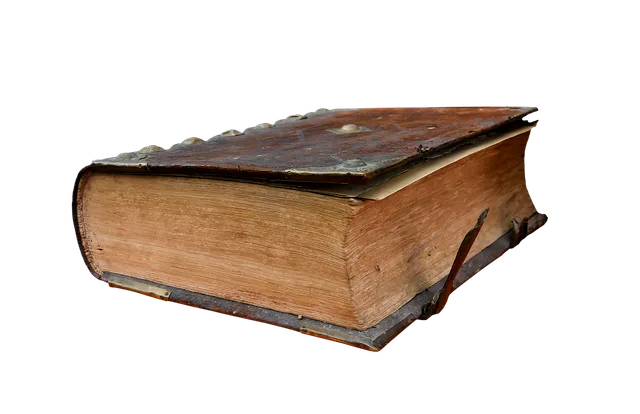
Before mechanical printing, every copy was a new act of transcription. Texts were reproduced in monastic and secular copying rooms one at a time, and each pass introduced changes: skipped lines, corrected grammar, marginal notes absorbed into the text, deliberate improvements by a copyist who thought he knew better.
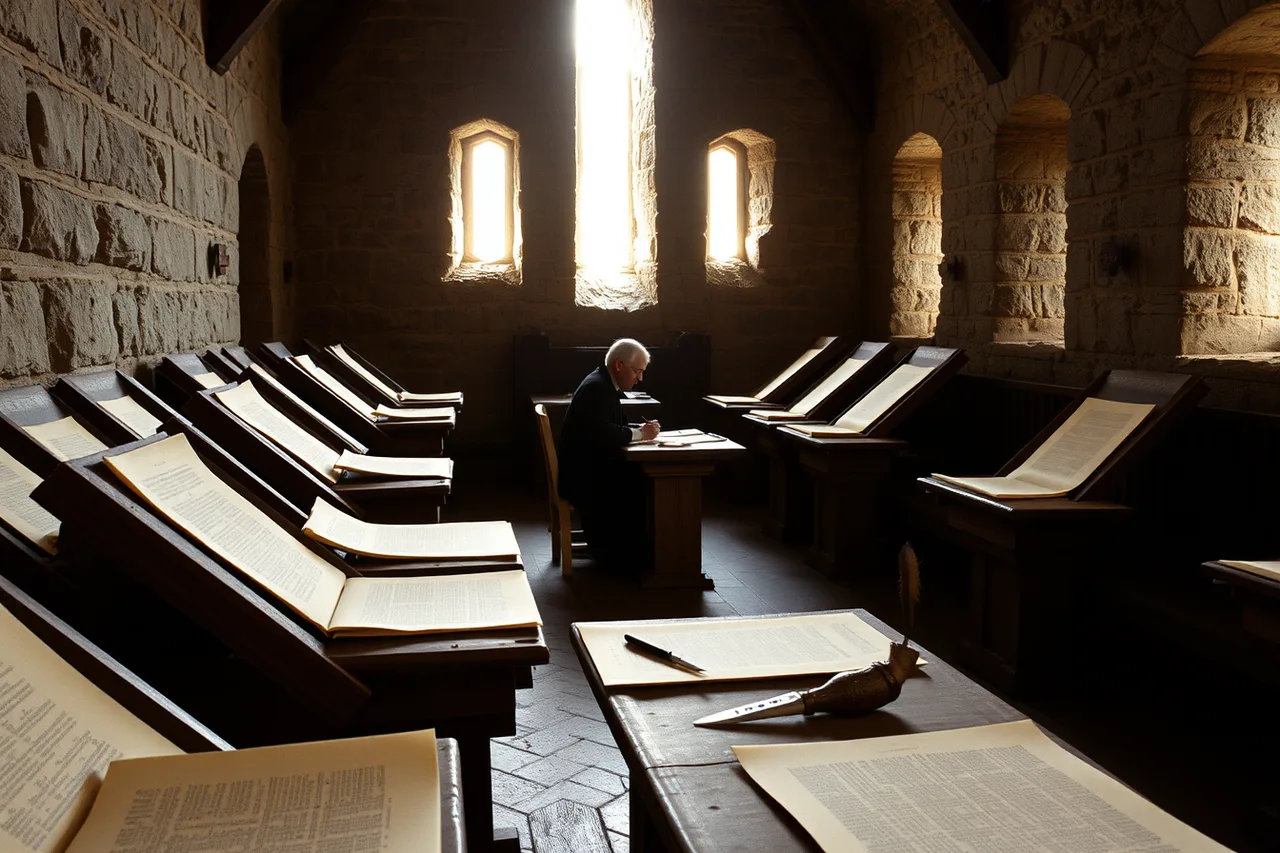
The consequence for quotations is direct. For an ancient or medieval line, no original exists. Surviving witnesses disagree. The wording in a modern edition is an editorial reconstruction from those witnesses.
Anyone quoting such a line quotes an editor's judgment. The honest citation names the edition, so cite the one you actually read: a Loeb Classical Library volume or an Oxford Classical Text for a Greek or Latin author, and the standard critical edition of the text for anything else. Editions also disagree because later hands reset and modernized the wording. That is why quotes by era misquotes deserves its own check.
Speech from these periods is worse. Reported remarks come to us through a chronicler writing later, often much later, frequently with an argument to make. Treating those as quotations in the modern sense is a category error.
One specimen shows what that looks like in practice. "The unexamined life is not worth living" is the most quoted line of ancient philosophy, and the speaker never wrote it down: Socrates left no text, and the sentence reaches us through Plato's Apology. Citing Plato's Apology, not Socrates alone, is the honest form.
Mechanical printing changed the problem rather than solving it. A run of identical copies means the wording is fixed within an edition, and the earliest printed books are datable objects that can be compared against one another. That is a genuine advance for tracing.
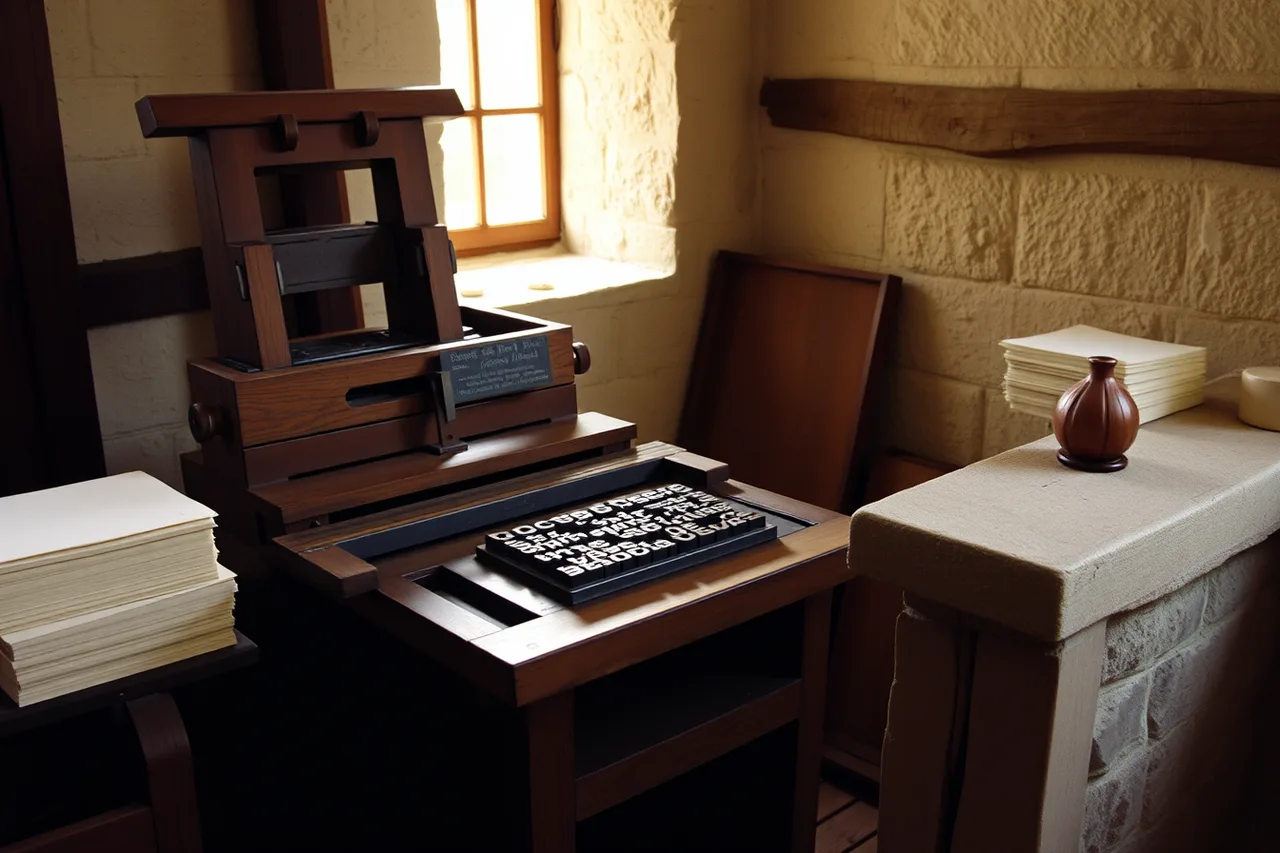
Print did not make the content true: a printed misattribution became stable, quotable, datable, and it reproduces perfectly.
Anthologies and schoolbooks drove this: a line entered a popular collection, which was reprinted for generations, and the attribution hardened into something everyone had seen in a book. Bartlett's Familiar Quotations and the Oxford Dictionary of Quotations are the best-known of those collections and the place most printed-era wording was handed on. Our account of how collections were assembled in different periods covers what those editors thought they were doing.
"Let them eat cake" is the standard printed misattribution. The line is attached to Marie Antoinette, but it appears in Rousseau's Confessions, older than the attribution, and no document ties her to it. What print supplied was not evidence but fixity: once the words sat in a book, every later collection could repeat them exactly, and repetition is what readers mistake for corroboration.
The reporter's notebook
Verbatim capture of speech arrives with systematic shorthand and the professional reporters who used it. This is the point at which a spoken sentence starts to have any independent record at all, and it changes the evidence picture completely for public speech: proceedings, trials, sermons, and platform speeches begin to leave transcripts.
The limits are worth naming.
- Shorthand is a compression, and expanding it back into words involves judgment.
- Reporters covered what their paper cared about, so coverage is skewed toward the powerful and the newsworthy.
- Speakers revised. Corrected texts issued afterward often differ from what the room heard, and the corrected version is usually what survives.
- Two reporters in one room produce two texts. Where both survive, they disagree in small ways, always.
That last point is useful rather than discouraging. Small disagreements between independent transcripts are what an authentic record of speech looks like. A remark that appears in identical wording everywhere, from a period before recording, is showing you a single source copied, not a well-attested statement.
Lincoln's Gettysburg Address is the familiar illustration. The several manuscript copies he wrote out and the reporters' dispatches from the day do not agree word for word, because no single text ever was the speech. All of them are evidence; none of them is the remark itself.
Recording
Sound and then film change the ceiling again. A recording is the first evidence that does not pass through a human transcriber, and where one exists it settles wording absolutely.
It also introduces its own traps: recordings are edited, broadcast material is cut for time, and the cut version is what circulates. Clips are captioned by people working fast.
Most speech in the recording era was still never recorded, so the technology's presence does not mean a specific remark was captured. Our material on checking spoken humor works through what can and cannot be established for a line delivered aloud.
The digital record
Everything is captured and nothing is dated. Text is edited in place, republished, syndicated, and stripped of context by the systems that move it. The technical ceiling on evidence has never been higher and the practical chronology has never been worse.
| Era | Best possible evidence | Characteristic failure |
|---|---|---|
| Manuscript | Surviving witnesses, compared | Copying variation, later chroniclers |
| Early print | A dated edition and page | Stable, reproducible misattribution |
| Shorthand reporting | A contemporaneous transcript | Revision after the fact |
| Recording | The recording itself | Editing and captioning |
| Digital | Everything, in principle | No trustworthy dates |
What this changes about your search
Ask what the best possible evidence for this era would be, then go looking for that specifically. It saves an enormous amount of wasted effort.
- For an ancient line, look for the modern critical editiona Loeb Classical Library volume or an Oxford Classical Text — and cite it as such. Do not expect an original.
- For an early modern line, look for the earliest printed appearance in Google Books or HathiTrust, and treat later collections as downstream.
- For a public remark in the reporting era, look for the proceedings — the Congressional Record for Congress — or the newspaper transcript of the day in an archive such as Chronicling America, not the biography.
- For a broadcast line, look for the recording or a contemporaneous transcript of it, in the network's own archive or the Vanderbilt Television News Archive.
- For anything recent, look for a dated publication, such as a page preserved in the Internet Archive's Wayback Machine, rather than the live page, because pages change.
Setting the standard by era protects you from a common unfairness: rejecting an old line for lacking evidence that could not exist, while accepting a recent one on evidence that is merely abundant.
The labels that distinguish sourced from attributed material let you say this cleanly. The catalog of transmission failures explains what happens in the gap.
Common questions
If no verbatim record could exist, should the line be used at all?
It can be, with the right label. A remark reported by a chronicler is a report, and saying so is honest. What is not honest is presenting it in quotation marks with a date, as though someone had written it down at the time.
Do older sources deserve more trust because they are closer to the event?
Closer in time helps, but only if the source was in a position to know. A writer working a century after an event has no advantage over one working three centuries after, if neither had access to a record. Proximity matters when it comes with access.
Which era produces the most misattributions?
The ones where lines circulated widely but capture was thin, so the printed anthology era is heavily affected. The digital era generates volume quickly, though a great deal of it is traceable if you catch it early enough.
What about translated material from any era?
Translation adds a layer on top of everything above. The wording you have belongs to a translator, and the era question then applies twice: once to the original record and once to the translation you are actually quoting.