Guides
6 places to check a quote in Chicago publishing and speech archives
Six Chicago archives hold the papers and tapes that settle disputed quotes, and most verification checks start with a written request to archivists.
What to take away
- Six institutions carry most Chicago quote workthe Newberry Library, the Chicago History Museum, the University of Chicago Library, Northwestern University Libraries, the Harold Washington Library Center, and the city's Department of Cultural Affairs and Special Events.
- Match the claim to the holder. Literary quote, publisher or university. Speech, broadcast collection or museum. Federal testimony, the National Archives.
- Editorial files often show a disputed sentence three timesmanuscript, copyedit, printed page. The differences show who changed the wording.
- Copyright registration establishes who owns a text. It never establishes who said a line.
- Send the exact wording, the claimed speaker and your first-seen source. One clear question gets a faster answer than a broad one.
What Chicago institutions hold
Chicago quote material sits in four kinds of buildings. Publishers kept editorial files, proof pages and author correspondence. Radio and television stations kept tapes and transcripts. Universities kept the papers of writers, politicians and scholars. The city kept programs and proclamations from official events.
Match the claim to the archive
What kind of quote is it?
Literary -> publisher archive or university
Civic -> broadcast collection or city records
That spread explains most attribution errors. A line misassigned to a novelist usually came from a review, not the novel. A line misassigned to a mayor usually came from a reporter's paraphrase, not the speech.
So start with the institution that matches the claim, not the one that is easiest to reach. A literary quote goes to a publisher archive or a university. A civic quote goes to a broadcast collection or city records. Federal testimony goes to the National Archives.
Federal holdings sit apart from city and private ones. The National Archives lists its facilities and reading rooms by region, which is how you confirm whether a record is held in Chicago or in the Washington, D.C. area. The Our Locations | National Archives page is where that check starts.
Some state and municipal material migrated into federal hands, and the Archives groups those guides by geography. The Cities and States | National Archives collection explains what is held where. That matters when a quote is credited to a Chicago official but the paper trail runs through a federal agency.
Once you know a record exists, the next step is ordering it. The Archives publishes request forms and reading room rules on its Research Our Records | National Archives page. Read that before you write to anyone.
Publishing houses and their editorial archives
Chicago was a publishing city before it was a broadcast city. Trade houses, textbook publishers, religious presses and university presses all left paper behind, and editorial files are the most useful of it for quote work.
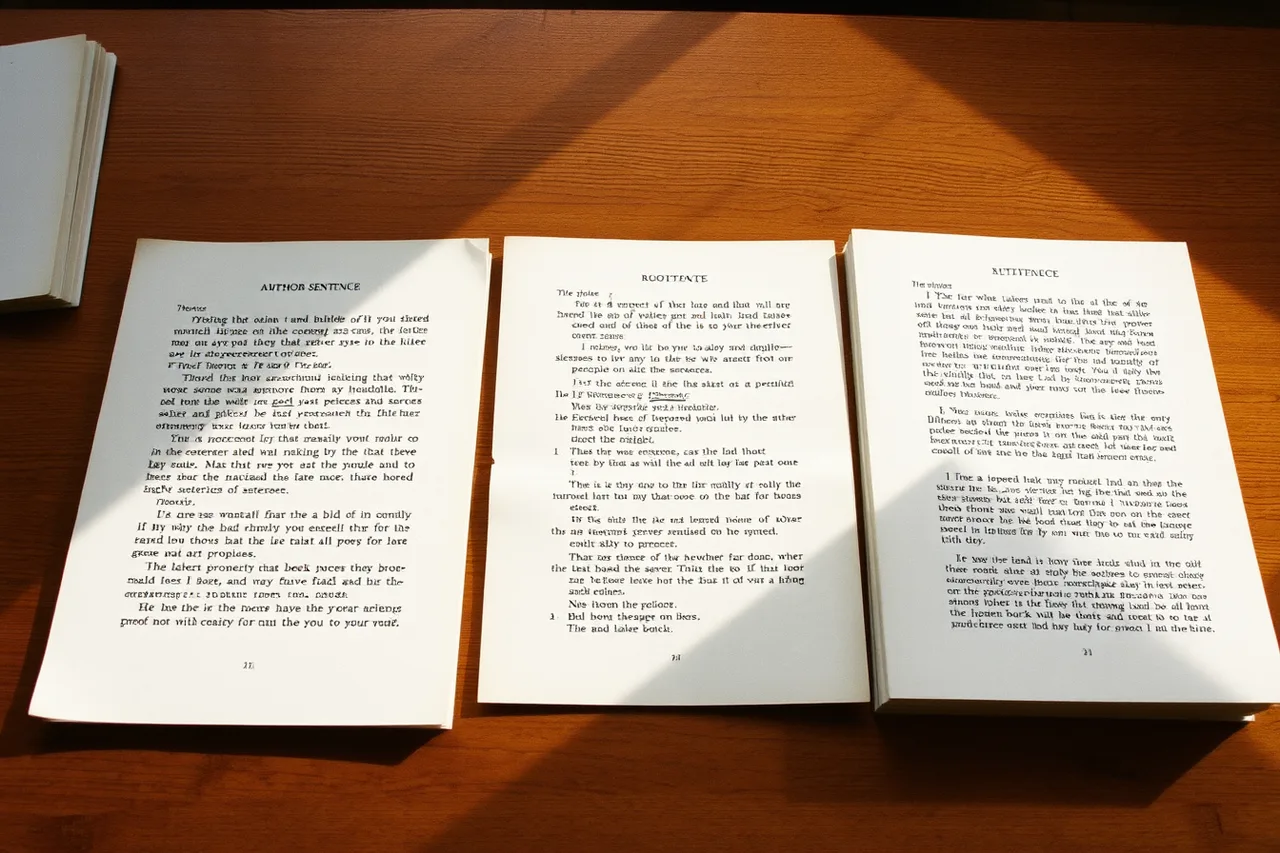
An editorial file can show one sentence in three states: the author's manuscript, the copyedited version, and the printed page. When wording is disputed, those three states often settle it. They also show who changed what, which is how misattributions get introduced in the first place.
University presses and their parent libraries hold the strongest runs. The University of Chicago Library and Northwestern University Libraries both hold press and author papers, and both answer written reference questions.
The Newberry Library is the other major stop. Its manuscript and print collections include literary and historical papers, and its reading rooms are open to the public by registration. No university affiliation is required.
One caution: editorial files are rarely digitized. You will usually need a finding aid, a box number and a scheduled visit. Ask for the finding aid first, then ask whether staff can check a single page for you.
Copyright status is a separate question from attribution. A published book containing quotations may be registered, and the U.S. Copyright Office explains what registration covers for text works on its Literary Works: Registration | U.S. Copyright Office page. Registration tells you who owns the text, not who said the line.
Comparing a book against a database takes the same discipline as any source check: find the earliest printed appearance, then work forward.
Speech archives and broadcast collections
Speech material is harder than print because so much of it was never transcribed. Chicago's broadcast history runs through radio, local television and public affairs programming, and the surviving tapes and transcripts are scattered across several holders.
The Chicago History Museum holds a large body of civic and broadcast-related material, including photographs, sound recordings and papers tied to public life in the city. Its research center takes written and email reference questions.
The Chicago Public Library system is the most accessible entry point. The Harold Washington Library Center holds special collections and periodicals on microfilm, including Chicago newspapers that printed speeches and interviews. Microfilm is unglamorous and it works.
University libraries fill the gaps. Northwestern University Libraries holds broadcast and journalism collections, and the University of Chicago Library holds papers of scholars, politicians and public figures. Both handle requests from outside researchers.
When a quote is credited to a speech, ask three questions. Was the speech recorded? Was it transcribed at the time? Did the speaker publish a later version? The answers decide which archive you need.
For federal speeches and testimony, the trail usually runs through Washington rather than Chicago. Congressional hearings and agency proceedings are federal holdings, and the National Archives research pages explain how to order copies.
One habit saves a week: check whether the quote already appears in a published collection. Anthologies and collected works cite their own sources, and that citation gives you a record number to request instead of a guess.
City cultural records and the routing problem
The City of Chicago's Department of Cultural Affairs and Special Events runs the city's cultural programming and keeps records tied to it, including material from public events, festivals and official cultural activity.
The department is not a quote database. It is a records office, and it is the right place to ask about city-produced material such as event programs, proclamations and official statements.
Its site describes the programs and divisions and is the entry point for questions about city cultural records. Start at the City of Chicago :: Cultural Affairs and Special Events page and look for the contact route for records or media questions.
Expect a routing step. City departments often forward research requests to the appropriate records custodian, and that adds time. Write a short request, state the event and the year, and ask who holds the file.
If a quote is credited to a city official at a public event, the department's records may show the program but not the words. Pair that request with a newspaper search from the same week. The two together usually settle it.
For quotes that circulate online without a source, treat the city record as one input among several. The method in this quote context and sources piece applies: locate the earliest traceable version before accepting any wording.
How to request a verification
Most institutions prefer a written request over a walk-in. The sequence below works by email or letter, and it works the same way in person with a scheduling step added.
How to request a verification
- Write the quote exactly as found
- Identify the likely holder
- Find the finding aid or catalog record
- Send a short email to the reference desk
- Offer to cover copying or scan fees
- Log the response and exact wording
Run this checklist before anything goes out.
- Quote written exactly, punctuation preserved
- Speaker, year and first-seen source noted
- Likely repository identified
- Finding aid or catalog number copied
- One clear question stated
- Fee and deadline expectations set
- Response logged with name and date
On a visit, register for a reader card, request materials in advance, and expect a delay while boxes come from offsite storage. Bring a pencil, not a pen, and expect bag restrictions.
If you are weighing whether a paid tool can replace any of this, the tradeoffs are covered in this Quote Verification App Review. Tools speed up searching. They do not read a manuscript page for you.
For quotes that exist only in online databases, the accuracy question changes. This comparison of Wikiquote vs Goodreads explains why database entries often lack the citation chain an archive provides.
When a quote's meaning depends on what surrounded it, the surrounding text is the whole point. That is the argument in this piece on humorous quotes source check, and it is why archives beat snippets.
Six institutions compared
Strongest holdings
- Newberry Library
- Manuscript and print collections, literary and historical papers
- Chicago History Museum
- Civic papers, photographs, sound recordings
- University of Chicago Library
- Author, scholar and public figure papers
- Northwestern University Libraries
- Broadcast, journalism and press collections
- Harold Washington Library Center
- Newspapers on microfilm, special collections
- Cultural Affairs and Special Events
- City event programs, proclamations, official statements
Access route
- Newberry Library
- Reader registration, reading rooms
- Chicago History Museum
- Written or email reference request
- University of Chicago Library
- Reference request, some public access
- Northwestern University Libraries
- Reference request, reading room visit
- Harold Washington Library Center
- Walk-in, library card for some material
- Cultural Affairs and Special Events
- Department contact and routing
Typical turnaround
- Newberry Library
- Days to weeks, depending on processing
- Chicago History Museum
- One to three weeks
- University of Chicago Library
- Days to weeks
- Northwestern University Libraries
- Days to weeks
- Harold Washington Library Center
- Same day for microfilm
- Cultural Affairs and Special Events
- Weeks, varies by record type
Turnaround figures are practical estimates, not promises. Processed collections move faster than unprocessed ones, and a one-page scan request moves faster than a full folder review.
Cost usually means copying or scanning fees, not access fees. Public libraries and the Newberry charge nothing to walk in. Reproduction charges vary by format and size.
If speed matters most, start with microfilm at the Harold Washington Library Center. If authority matters most, start with the repository that holds the original manuscript.
Common questions
Do I need a university affiliation to use these archives?
No. The Newberry Library, the Chicago History Museum and the Chicago Public Library serve the general public. University libraries vary, and most let outside researchers register for reading room access.
Can I verify a quote entirely by email?
Often, yes. A short request with the exact quote and a collection identifier is enough for many repositories to check one page and reply. Complex requests usually need a visit.
What if the quote is credited to a Chicago mayor or alderman?
Check city records and newspaper microfilm from the same week. City records may show the event, while the newspaper may carry the actual words. Compare both before you cite either.
Are federal records in Chicago or in Washington?
It depends on the agency and the record group. The National Archives lists its facilities by region, so confirm the holding location before you send a request.